Common PCB Mold Defects and How to Prevent Them
Introduction: The Cost of Mold Defects in PCB Production
Even with the best design and materials, PCB molds can develop defects that compromise the quality of the circuit boards they produce. These defects not only lead to wasted materials and production downtime but also increase costs and damage a manufacturer’s reputation. Understanding the most common PCB mold defects, their root causes, and how to prevent them is essential for maintaining efficient, high-quality production. In this article, we outline the top PCB mold defects, their causes, and practical prevention strategies.
1. Mold Wear and Tear: Premature Deterioration of Precision Features
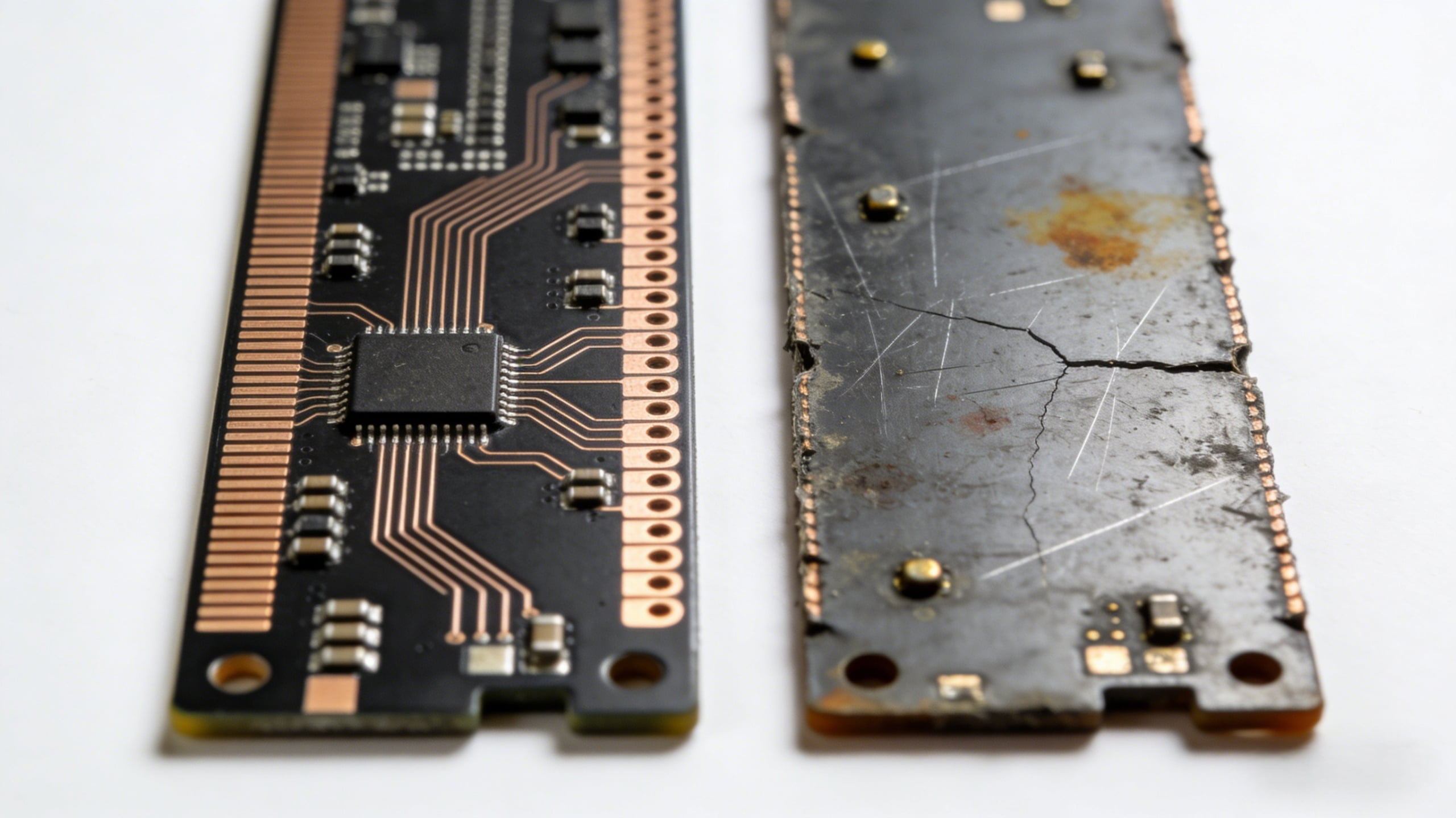
Defect Description: Over time, PCB molds experience wear on their surfaces, including scratches, dents, or erosion of precision features (e.g., stencil apertures, solder mask grooves). This wear leads to uneven mold surfaces, resulting in PCBs with inconsistent solder mask thickness, misaligned solder paste application, or exposed traces.
Root Causes: High production volume without proper maintenance; use of abrasive materials (e.g., low-quality solder paste, cleaning agents); poor mold material selection (e.g., using aluminum for high-volume production); improper storage or handling of the mold.
Prevention Strategies: Choose the right mold material (e.g., stainless steel for high-volume production); implement a regular maintenance schedule (clean the mold after each production run, inspect for wear, and polish or repair damaged surfaces); use high-quality, non-abrasive cleaning agents and solder materials; store molds in a clean, dry environment to avoid corrosion; limit production runs to the mold’s recommended lifespan.
2. Dimensional Inaccuracy: Molds That Don’t Match PCB Specifications
Defect Description: The mold’s dimensions do not match the PCB design specifications, leading to PCBs that are too large, too small, or have misaligned features (e.g., vias, pads, or traces). This defect can render PCBs incompatible with components or assembly processes.
Root Causes: Poor mold design (e.g., incorrect calculations for thermal expansion); imprecise machining during mold fabrication; thermal deformation (molds expanding or contracting due to temperature changes during production); inadequate quality control during mold manufacturing.
Prevention Strategies: Work with experienced mold designers who account for thermal expansion and PCB design specifications; use precision machining equipment (e.g., CNC machines) for mold fabrication; implement strict quality control checks (e.g., 3D scanning) to verify mold dimensions before production; maintain stable temperature conditions in the production environment to minimize thermal deformation.
3. Mold Contamination: Debris and Residue Impacting PCB Quality
Defect Description: Contaminants (e.g., dust, debris, residual solder paste, or cleaning agents) accumulate on the mold’s surface, transferring to the PCB during production. This leads to defects such as solder bridges, poor adhesion of solder mask, or surface irregularities on the PCB.
Root Causes: Inadequate cleaning of the mold between production runs; dirty production environment; using contaminated materials (e.g., solder paste, substrate); improper storage of the mold (exposure to dust or debris).
Prevention Strategies: Clean the mold thoroughly after each production run (use non-abrasive cleaning agents and compressed air to remove debris); maintain a clean production environment (implement air filtration systems, require cleanroom attire); use high-quality, contamination-free materials; store molds in sealed containers or clean storage cabinets when not in use.
4. Mold Chipping or Cracking: Structural Damage to Mold Surfaces
Defect Description: Small chips or cracks form on the mold’s surface, often in areas with sharp edges or high stress. These defects can transfer to the PCB, causing scratches, tears, or uneven surfaces.
Root Causes: Mishandling of the mold (e.g., dropping or impact); using brittle mold materials (e.g., tungsten carbide without proper care); excessive pressure during production; thermal shock (rapid temperature changes).
Prevention Strategies: Train staff on proper mold handling (avoid dropping, use lifting equipment for heavy molds); choose mold materials with appropriate toughness (e.g., stainless steel for high-stress applications); adjust production pressure to match the mold’s capabilities; avoid rapid temperature changes (gradually heat or cool the mold during production).
Conclusion: Proactive Defect Prevention for Long-Lasting Molds
By proactively identifying and addressing these common PCB mold defects, manufacturers can minimize production waste, reduce downtime, and ensure consistent PCB quality. Regular maintenance, proper material selection, and strict quality control are the keys to preventing mold defects and maximizing the lifespan of your PCB molds.